
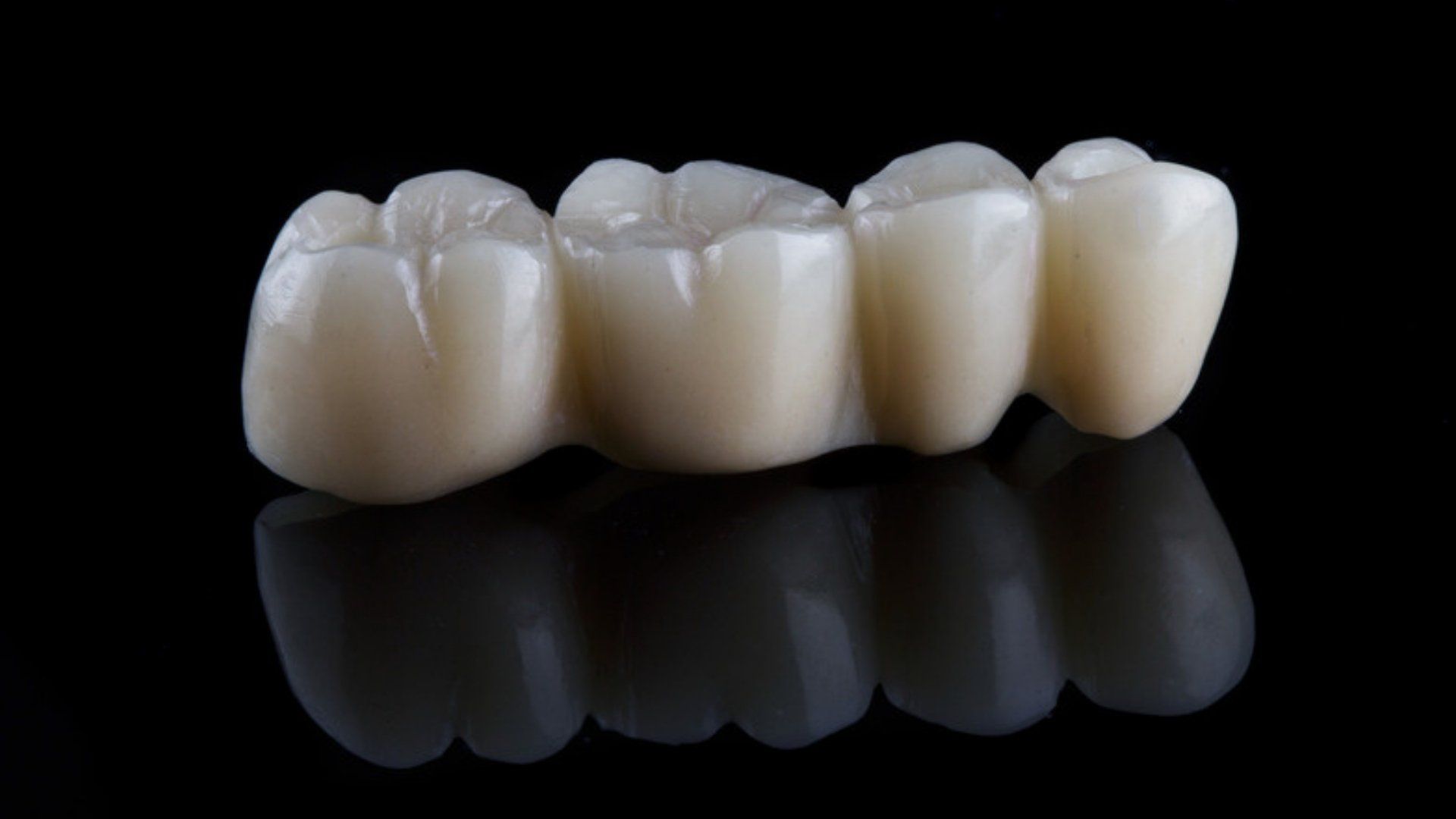
The dental implant vs bridge choice depends on the teeth and bone around the gap, your budget and your timeline. An implant replaces the missing root with a post in the jaw. A bridge is anchored to crowns on the neighboring teeth. A bridge usually costs less at first and takes weeks, not months, but often needs replacing sooner.
Family First Dental has served the Tri-Cities since 1994 and now has five offices in Kennewick, Richland and West Richland. Its dentists talk patients through implants, bridges and dentures before anyone has to choose.
Call Family First Dental at (509) 581-3611 to talk through both options for your own mouth. The call reaches all five offices.
How Is a Dental Implant Different From a Bridge?
A dental implant replaces the root of a missing tooth. Mayo Clinic describes a metal, screwlike post set into the jawbone and topped by a short extension called an abutment. The abutment holds the crown, the visible tooth-shaped cap. Dental implants for missing tooth replacement leave the neighboring teeth untouched. Family First Dental explains how implants work on its page about dental implants in the Tri-Cities.
A bridge leans on those neighbors instead. The ADA’s MouthHealthy site calls it a fixed partial denture, meaning false teeth attached to the surrounding teeth. Its page on how dental bridges work notes that only a dentist can remove one. Cleveland Clinic says a traditional bridge puts crowns on both ends with a pontic, or false tooth, between them. Maryland bridges, used mostly for front teeth, grip with metal wings instead. That difference in support runs through any bridge vs dental implants comparison.
How Does the Dental Implant vs Bridge Cost Compare?
Many patients ask about price first. A Cleveland Clinic Health Essentials article says a bridge usually costs less up front than an implant. Insurance is also more likely to cover a bridge, the article adds. For a full look at implant prices, read what dental implants cost in Washington.
A price someone else paid says little about your own gap. At a visit, a Family First Dental dentist can look at the gap and talk through both options. The exam shows whether your bone can hold an implant and whether your neighboring teeth can carry a bridge.
How Much Cheaper Is a Bridge Than an Implant?
Cleveland Clinic gives no dollar figure for bridges and says only that a bridge usually costs less up front than an implant. For implants, a February 2026 Dental Economics report surveyed 278 dental practices in six U.S. metro areas, none of them in Washington. The median, or middle, price for a complete implant, meaning post, abutment and crown, was $4,000. The middle half of prices ran from $3,000 to $5,125. Tooth bridge cost depends on the type and the number of units. A traditional bridge for one gap has three units, two crowns and the pontic between them.
Which Costs Less Over the Years?
Two Cleveland Clinic sources give different figures. Its health library puts the average lifespan of a bridge at five to 15 years. Its Health Essentials article cites the American Dental Association and calls replacement after five to seven years “not uncommon” for a bridge. Implants generally last much longer, the health library says, though Health Essentials puts the crown on top at around 15 years. Paying for a second bridge can shrink the price gap over time. No one can promise how long either option will last in your mouth.
What Are the Disadvantages of Dental Bridges?
If you are weighing a bridge with Family First Dental, start by asking about the health of the teeth beside the gap. MouthHealthy says a bridge’s success “depends on the foundation,” so those teeth need to stay healthy and strong.
Bridges have real strengths. Cleveland Clinic says they are typically more comfortable than partial dentures and more affordable than implants. Their drawbacks come from the work done on the teeth that hold them in place. Those teeth hold the whole bridge up for as long as it stays in your mouth.
Reshaping the Teeth Beside the Gap
A traditional bridge needs a crown on the tooth at each end of the gap. To fit those crowns, the dentist removes some enamel, the hard outer layer of a tooth. Cleveland Clinic calls this step irreversible. Health Essentials notes that the crowns may go on teeth that never needed treatment. The ADA’s implant page speaks to people who would rather not have good tooth structure removed to make a bridge.
Harder Cleaning and More Decay Risk
Health Essentials says patients report more cavities and tooth decay after getting bridges. “A bridge can be a pain to clean,” says the dentist interviewed for that article. Cleveland Clinic’s health library warns that decay or damage to the support teeth can weaken the whole bridge. Knowing how cavities start helps you protect those teeth. So do regular dental exams.
Why Would a Dentist Not Recommend an Implant?
The ADA’s page on who is a good candidate for implants says your health matters more than your age. For younger patients, Mayo Clinic says the jawbone must be fully grown. Cleveland Clinic says implants may not suit people under 18, whose jaws may still be growing.
When a dentist advises against an implant, the reason usually involves the mouth, the jaw or general health. Some of these problems can be treated first, which delays the implant rather than ruling it out. Others may point toward a bridge or a denture instead.
Mouth and Jaw Conditions
An implant depends on the bone and gums around it. The ADA says the bone grows around the post over several months and holds it in place, a process Mayo Clinic calls osseointegration. Anything that weakens that bone or the gums can slow the plan. Cleveland Clinic lists several conditions in the mouth that can make an implant a weaker option.
Untreated Gum Disease or Decay
Cleveland Clinic names active or untreated gum disease, extensive tooth decay and poor oral hygiene. Gum disease is an infection of the gums and other tissues that hold teeth in place. A dentist will often want these problems treated and under control before planning an implant.
Too Little Jawbone
Cleveland Clinic also lists severe bone loss in the jaw. Mayo Clinic says a jawbone that is not thick enough or is too soft may need bone grafting first. Grafting adds bone from your own body, a donor or a bone substitute. The graft may take several months to grow enough new bone.
Health and Lifestyle Factors
General health matters too. MouthHealthy says chronic illnesses such as diabetes or leukemia may interfere with healing after surgery, and tobacco can slow healing. Cleveland Clinic adds unmanaged diabetes, bone disorders and some autoimmune diseases, in which the immune system attacks healthy tissue. It also says an implant may not be a good idea for people who smoke or vape. Told no by another dentist? Family First Dental offers a free second opinion when you bring that dentist’s X-rays and treatment plan.
Which Is More Painful, a Bridge or an Implant?
Cleveland Clinic and Mayo Clinic do not rank the two by pain, but they describe what each involves. For a bridge, Cleveland Clinic says the dentist numbs the area with local anesthesia before shaping the support teeth. If that step worries you, a Family First Dental dentist can explain it before any work begins. Teeth and gums take one to two weeks to heal on average. Bridges also need no bone grafting or invasive surgery, according to Health Essentials.
Placing an implant is surgery. Mayo Clinic says swelling of the gums and face, bruising and pain at the implant site can follow. Minor bleeding is possible too. You may need pain medicines or antibiotics afterward, and Mayo Clinic explains what recovery after implant surgery involves.
How Do You Choose Between an Implant and a Bridge in the Tri-Cities?
About 35% of Washington adults have had at least one adult tooth removed because of decay or gum disease. That figure comes from the CDC’s 2024 Behavioral Risk Factor Surveillance System, a national health survey. The median across all states and the District of Columbia was 39.9%. For many Tri-Cities patients, the next question is how dental implants vs bridge work compare.
Family First Dental helps patients explore implants, bridges and dentures. The health of the teeth beside the gap shapes the choice, and so do the bone and gums where an implant would go. Your timeline and budget matter too.
Dr. Jordan Tingey, DMD, a 2020 Roseman University dental graduate, can review those factors with you at the Washington Street office in Kennewick. If an implant fits, see how single-tooth dental implants work without relying on neighboring teeth.
Compare a Dental Implant vs Bridge With Family First Dental
No article can settle the dental implant vs bridge question for you the way an exam can. Book the $99 new patient implant consultation at Family First Dental, including a 3D image where indicated, to see whether an implant fits your mouth. Specials can change, so confirm the offer when you book.
Call (509) 581-3611 to schedule, or send a request through the contact page.
Family First Dental has three Kennewick offices on Deschutes Avenue, Washington Street and Yelm Street, plus offices in North Richland and West Richland.
This article is general dental information, and only an exam by a licensed dentist can tell you which option fits your mouth.
Reviewed by Jordan Tingey, DMD