
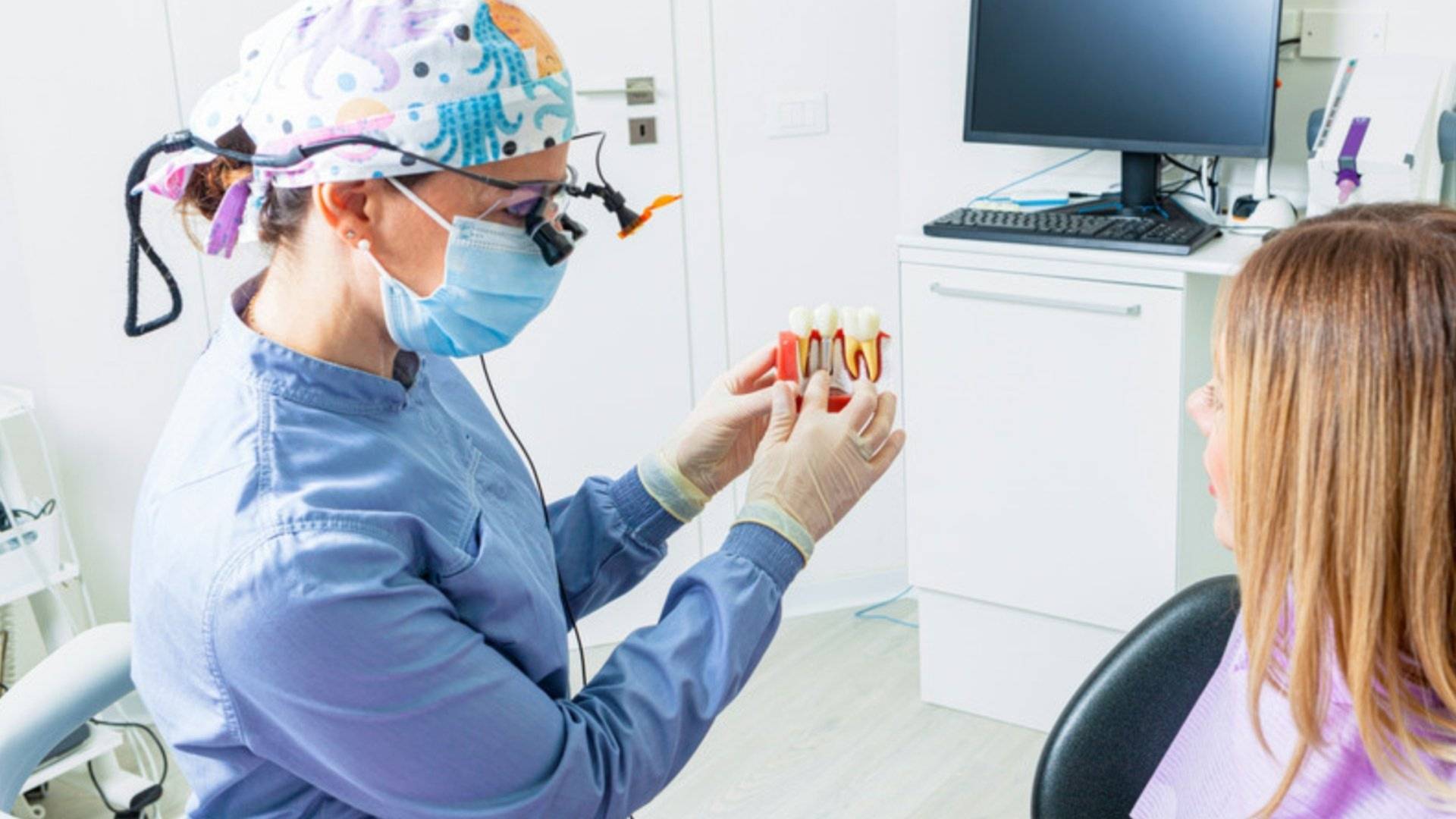
Dental implants cost about $3,000 to $5,125 for one tooth, counting the post, abutment connector and crown. That is the middle half of prices, with a $4,000 median, in a survey of 278 dental offices in six U.S. cities, published in 2026. Bone grafts and tooth removal cost extra, and Washington charges no retail sales tax on dental care.
Family First Dental has served Tri-Cities families since 1994. This page explains where the survey numbers come from, what adds to them and how much insurance tends to pay. It also covers a Washington tax rule and a free ZIP code lookup you can run yourself.
Call Family First Dental at (509) 581-3611 to book an implant consultation. A dentist can then look at your gums, bone and bite, which is what turns these figures into a plan for your mouth.
What Is the Typical Price for a Tooth Implant in Kennewick?
Family First Dental places dental implants in Kennewick and Richland, and many patients ask for a local average before they call. No public survey reports one for Kennewick, the Tri-Cities or Washington as a whole. So a search for dental implants cost in Kennewick, WA, mostly returns national price pages.
The most useful outside benchmark, a survey of 278 dental offices, found a $4,000 median for one implant tooth. That gives you a starting point for judging any estimate. Two more checks help you read a quote, Washington’s tax treatment of dental care and a free ZIP code lookup.
What a National Price Survey Found
Dental Economics published the survey in February 2026. Steve L. Koo, DDS, and Julie Mai reported on phone calls to 278 dental practices in six metro areas in September 2025. The median price, the middle quote in the list, was $4,000 for a complete implant. That covers its post (the metal root), abutment (the connector) and crown (the visible replacement tooth). Half of all quotes fell between $3,000 and $5,125. City medians ranged from $3,665 in Houston to $5,505 in Minneapolis. No Washington city was in the sample, so treat these as national markers.
Washington Adds No Retail Sales Tax
Washington’s Department of Revenue treats what a dentist charges for care as service income. That holds even when a crown or other dental prosthesis, meaning a replacement tooth part, shows up as its own line on the bill. The dentist pays the state’s business and occupation tax on that income, and no retail sales tax applies to the care. Items sold apart from treatment follow different rules. For an implant, abutment and crown placed during care, your estimate should show no sales tax line.
How to Check Typical Prices for Your ZIP Code
FAIR Health, an independent nonprofit, runs a free dental cost lookup for consumers at fairhealthconsumer.org. You enter the place where you will get care, such as ZIP code 99336 in Kennewick, and then a procedure. The tool returns estimated costs for that area. It cannot see your X-rays or your bone, so use its numbers as a check on a quote rather than as a quote.
Why Do Dental Implants Cost More for Some Patients?
For dental implants, how much does it cost once every step is counted? The survey above priced the post, abutment and crown for a single tooth, so it is only a starting point. The American Association of Oral and Maxillofacial Surgeons, known as AAOMS, lists what moves the price. Location comes first, because each office has its own costs for overhead and supplies.
Surgical needs come next, starting with tooth removal and the type of anesthesia, the medicine that blocks pain. Some patients also need bone grafting, which adds bone where the jaw is too thin to hold an implant. X-rays and materials add to the total. So do the crown and the number of teeth being replaced. The next sections price the three parts every implant tooth needs.
The Three Parts of Every Implant Tooth
Mayo Clinic explains how dental implant surgery works. The surgery replaces a tooth root with a metal, screwlike post. An extension of that post, called an abutment, holds the crown. The Dental Economics survey asked offices for each part’s price as well as the total. Not every office priced every part, so each figure below comes from a different group of offices. The part medians add up to more than $4,000, so compare each one with the same line on a quote.
The Implant Post
The post sits in the jawbone and takes the place of the tooth root. The ADA’s MouthHealthy site says implants are made of titanium and other materials that are compatible with the human body. In the survey, the post alone had a median price of $2,572. Half of the 102 offices that priced the post alone quoted between $2,180 and $3,000.
The Abutment
The abutment is the short connector that joins the post to the crown. Only 35 offices in the survey priced a custom abutment by itself, so this figure rests on a small sample. Their median was $1,100, and the central half of their quotes ran from $800 to $1,300. Many more offices priced the abutment together with the crown.
The Crown
The crown is the visible tooth, shaped and shaded to blend in with your other teeth. A crown plus abutment had a median price of $2,700 in the survey. The middle half of those prices sat between $2,000 and $3,000. MouthHealthy notes that the final tooth takes time to make. In the meantime, your dentist may give you a temporary crown so you can eat and speak normally.
Extra Steps That Change the Total
The survey did not price the steps that can come before or during implant surgery. Independent price data for these steps is hard to find. That makes a clear treatment plan even more useful, because it lists each extra step on its own line. Ask for that detail before you agree to start, since it shows exactly where two quotes differ.
Removing a Damaged Tooth First
A damaged tooth may need to come out before an implant goes in. AAOMS lists tooth removal as one of the surgical costs that vary from patient to patient. Once the tooth is out, the empty socket may also need a graft to hold bone for the implant. You can read how tooth extractions work in Kennewick and Richland before your visit.
Bone Grafting When the Jaw Is Too Thin
A bone graft adds bone where the jaw has too little to hold an implant. Mayo Clinic says you may need one if your jawbone isn’t thick enough or is too soft. Cleveland Clinic says a graft needs at least three months to heal, and a large one may take nine to 12 months. It also advises getting the implant within six to 12 months after the graft heals. Many patients ask about dental implants bone graft cost, and the answer depends on which kind of graft you need.
Socket Grafts After an Extraction
A socket graft places bone in the empty space left when a tooth comes out. Cleveland Clinic lists this among the uses of a dental bone graft. The goal is to rebuild bone in that spot so a later implant has a strong foundation. When an extraction and a graft are both needed, each should appear on the estimate.
Sinus Lifts for Upper Back Teeth
The maxillary sinuses are the sinus cavities below your eyes and alongside your nose. A sinus lift is a graft that raises the floor of that space to make room for new bone. This step is necessary before dental implants in some situations, according to Cleveland Clinic. Ask whether your plan includes one, since another graft changes both the timeline and the total.
3D Imaging for Planning
Implant planning can include a cone beam CT scan, a type of X-ray that builds a 3D picture of the jaw. The FDA lists dental implant planning among the uses of these scans. The agency also notes that they typically deliver more radiation than regular dental X-rays. That is one reason a 3D scan is taken only when it is needed. At Family First Dental, the $99 new patient implant consultation includes a 3D image where indicated.
How Much Are Dental Implants for More Than One Tooth?
Replacing several teeth costs more than replacing one. AAOMS says surgery for multiple teeth costs more because it takes longer and uses more materials. The ADA’s MouthHealthy site adds that custom bridges or dentures are made to fit your implants when more than one tooth is replaced. That means a few implants can sometimes hold several teeth.
The right setup depends on how many teeth are missing and where they sit. Family First Dental treats single and multiple missing teeth with implants and also offers implant-supported dentures, which are dentures held in place by implants. A consultation can compare those options side by side. Each one is priced in its own way, which is why this page gives no single figure for them.
Several Missing Teeth in a Row
Dentists can use implant-supported bridges when three or more teeth in a row are missing, according to Cleveland Clinic. A bridge is a row of replacement teeth joined together, and here it rests on implants instead of natural teeth. The implants must first fuse with the jawbone, which can take three to nine months. The estimate turns on how many implants the bridge needs and how many teeth it spans.
A Full Mouth of Implant Teeth
Full-arch treatment replaces every tooth in the upper or lower jaw, which dentists call an arch. Published full mouth dental implants cost figures tend to come from insurers, lenders and dental chains, not independent surveys. This page does not repeat them. An exam sets that price. You can see how full-mouth dental implants are planned before you book. Closer to home, CDC estimates that 10.0% of Benton County adults 65 and older have lost all their natural teeth. The national estimate is 12.2%, based on 2022 survey data.
How Much Will Insurance Pay for Dental Implants?
AAOMS says only some insurance plans cover dental implants, and even those plans have annual limits. That makes the fine print in your plan as important as the price an office quotes. Family First Dental works with many dental insurance companies and can walk you through your coverage.
Washington’s Apple Health program is the state’s Medicaid plan. The Washington State Health Care Authority says it does not cover dental implants for adults 21 and older. You can read what Apple Health dental coverage includes for adults in a separate article. For private dental plans, two terms shape what you pay, and Medicare follows its own rules.
Annual Maximums Cap What a Plan Pays
An annual maximum is the most a dental plan will pay in one benefit year. The ADA News report on annual maximums, published December 19, 2025, cites figures from the National Association of Dental Plans. In that data, 32.8% of in-network maximums sit between $1,000 and $1,500. Another 48.2% fall between $1,500 and $2,500. Only 17.2% run from $2,500 up to no maximum at all. The familiar design pays 100% for preventive care, 80% for basic care and 50% for major work. Some plans now pay as little as 20% for major services.
Here is a simple example, not a quote. If a plan pays half of a $4,000 implant, its share is $2,000. A $1,500 annual maximum stops the plan at $1,500, so the other $2,500 falls to you.
How a Missing Tooth Clause Can Block Coverage
A missing tooth clause is a plan term that limits or excludes coverage for a tooth that was already missing when your coverage started. A 2018 proposal in Olympia would have limited these clauses in Washington plans. It stalled in committee after its first reading and never became law. That leaves the wording of your own plan in charge. Check the limitations section of your plan documents before treatment, and ask your insurer whether the clause applies to the tooth you want replaced.
What Original Medicare Covers
Medicare.gov says Medicare usually does not pay for dental services like routine cleanings, fillings and tooth extractions. The same page names dentures and implants among the items it usually does not cover. Medicare may cover some dental care during a hospital stay that a medical condition makes necessary, or care tied to certain treatments, such as an exam before a heart valve replacement. If you have a different kind of Medicare plan, check its dental benefits directly before you count on help.
Can You Use an HSA or Payment Plan for Dental Implants?
IRS Publication 502, written for 2025 tax returns, says amounts paid to prevent and relieve dental disease count as medical expenses. It lists artificial teeth as a medical expense too. Money in a health savings account, or HSA, can go toward medical care as the tax code defines it, according to IRS Publication 969. A health flexible spending account, or FSA, covers the expenses its plan names that would also qualify for that deduction. Check your plan before you schedule.
Family First Dental accepts major credit cards, checks and cash. Financing and payment plans are available for patients who want to spread out the cost. If you do not have dental insurance, an in-office dental plan gives you care through the year plus discounts on treatment. You can review the payment options and in-office dental plan before your first visit.
Is a Dental Implant Worth the Money?
Whether an implant is worth it depends on your situation. Start with what happens if you leave the gap alone. MouthHealthy explains what happens when a tooth stays missing. Remaining teeth may shift, and bone loss can sometimes occur around the gap.
Cleveland Clinic says implants generally last much longer than bridges, and a bridge lasts five to 15 years on average. A separate Cleveland Clinic article says the crown on top of an implant generally lasts around 15 years. At a consultation, a Family First Dental dentist can review both options with you and explain the trade-offs. You can also read how an implant compares with a bridge before you decide.
A dentist quoted by Cleveland Clinic says implants still need care and maintenance after they are placed. Regular checkups give a dentist a chance to look at the gums around the implant, so it helps to know how often to schedule dental exams.
How Painful Is Getting a Dental Implant?
Cleveland Clinic says the implant is placed under anesthesia. Afterward, Mayo Clinic says you may notice swelling of the gums and face along with some bruising. Pain at the implant site and minor bleeding can also occur. You may need pain medicines or antibiotics after surgery, and your dentist decides whether you do.
MouthHealthy suggests soft foods, cold foods and warm soup while you heal. The first round of healing takes about one week. Cleveland Clinic’s implant page says full bonding can take three to nine months. Family First Dental explains what to expect at each stage during your consultation.
What Happens at an Implant Consultation in the Tri-Cities?
At Family First Dental, new patients can book a $99 new patient implant consultation, including a 3D image where indicated. It is one of the practice’s current specials, and specials can change. The consultation page explains what an implant consultation covers, including your gums, jawbone and bite. When a 3D image is taken, the team uses it to review available bone, spacing and nearby structures.
Dr. Mike Pratt, DDS, sees patients at the Yelm Street office in Kennewick. He has advanced training in complex implant placement and 3D imaging, and he is a graduate of the WhiteCap Dental Implant Institute. Dr. Garrett Gallinger, DMD, who practices at the Deschutes Avenue office, has advanced training in implant placement as well.
Already holding a plan from another office? Family First Dental gives a free second opinion when you bring X-rays and a treatment plan from another dentist. Laying two plans side by side shows where the totals differ, whether that is a graft, a scan or the crown itself.
Get Answers About Dental Implants Cost From Family First Dental
A national survey gives you a range, but your own dental implants cost depends on your bone, your gums and the number of teeth involved. The clearest next step is a $99 new patient implant consultation with Family First Dental.
Call (509) 581-3611 to book, and the phone menu will connect you with the office you choose. You can also send a request through the contact page.
Family First Dental has three offices in Kennewick, on Deschutes Avenue, Washington Street and Yelm Street. Two more serve North Richland and West Richland.
The consultation is the time to ask about each step and its cost. After that, the choice is yours.
This article shares general cost and dental information and does not replace an exam and estimate from a licensed dentist.
Reviewed by Raquel Kafentzis, DMD